
What Idaho Probate Covers
Probate in Idaho includes informal and formal estate administration, testate estates with a will, intestate estates without a valid will, appointment of a personal representative, summary administration where authorized, and small-estate collection when current legal conditions are met. The Magistrate Division also hears trust disputes and protective cases involving guardianship or conservatorship. The proper route depends on the assets, title, any dispute, and the priority of the proposed representative. A will kept at home, in a safe deposit box, or with counsel does not become a public Idaho probate record until it is lodged or filed in a court proceeding.
Every Idaho county has a Magistrate Division within its District Court. It is not a separate probate court. The elected county clerk, acting ex officio as Clerk of the District Court, maintains the local file. A person may search status statewide, but the filing clerk retrieves archived papers and issues official copies. The Idaho county directory leads to the proper clerk.
Idaho Probate Terms Defined
Idaho estate and protective-case files use terms that show who is involved and what authority the Magistrate Division has granted.
- Testator
- The person who made a will.
- Executor or personal representative
- The person named or appointed to administer an estate. Idaho commonly uses personal representative.
- Intestate
- Dying without a valid will, so Idaho intestacy law controls distribution.
- Letters
- The court paper showing that a personal representative has authority to act for the estate.
- Guardianship
- Court authority over personal care and decisions for a protected person.
- Conservatorship
- Court authority to manage a protected person's money and property.
- Inventory
- A record of estate assets and values when filing is required.
How to Search Idaho Probate Records
The Idaho iCourt Portal is the statewide starting point. Probate is one case type within iCourt, not a stand-alone probate database. Smart Search can use a decedent or party name, county, case type, case number, and date. The result may identify the case and events without supplying every PDF. Older estates can remain in paper, microfilm, or archive storage. Note the case details and ask the filing county's Magistrate clerk for the exact paper.
- Identify the likely county from the decedent's domicile or the estate proceeding.
- Search iCourt by name or case number, then narrow by county, probate type, and date.
- Record the case number, filing date, status, parties, and relevant document titles.
- Ask the county clerk for each paper needed, such as the will, letters, inventory, or closing order.
- Specify inspection, a plain copy, or certification and ask about cost, payment, delivery, and access proof.
The statewide Court Assistance Office provides self-help routes, though clerk staff cannot select a procedure or give legal advice.
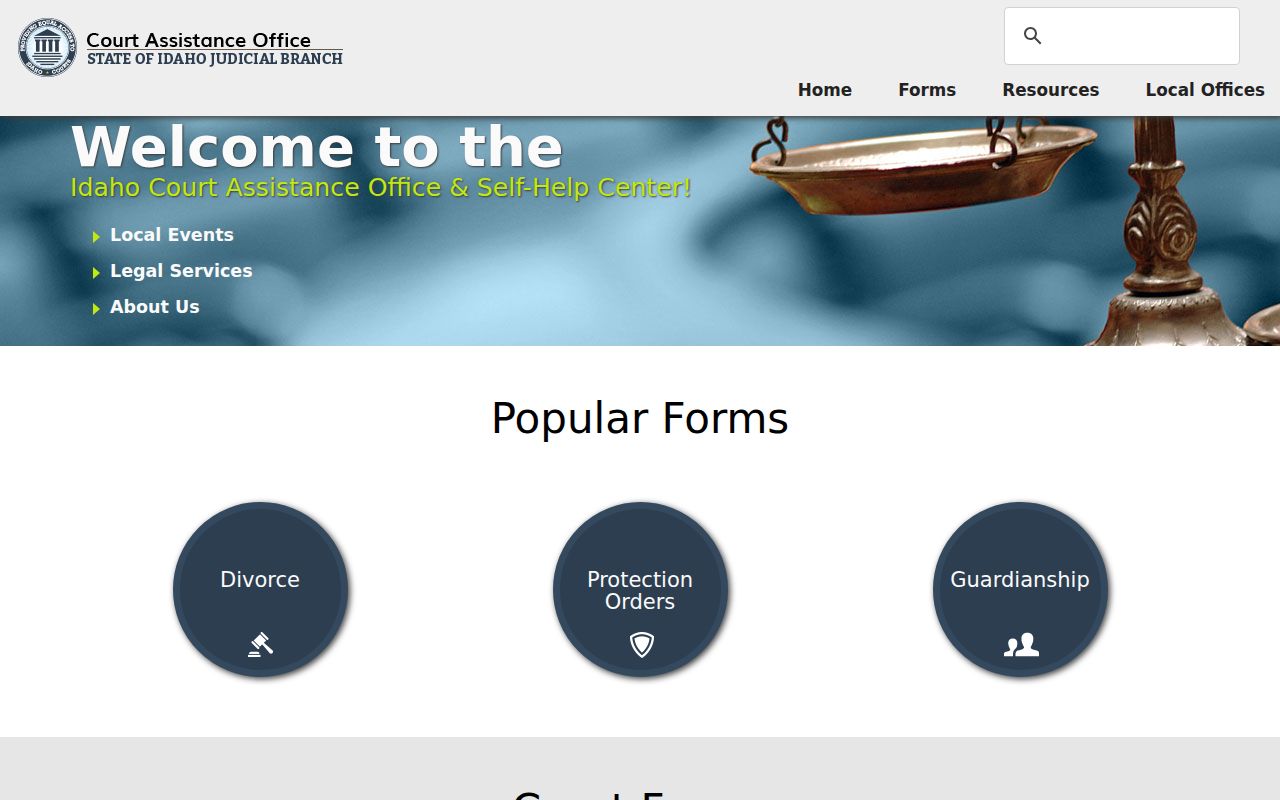
The official resource helps readers distinguish court forms from choices that may need legal advice.
Note: An iCourt name match identifies a possible case, while the filing clerk's certified copy authenticates the Idaho probate document.
Idaho Magistrate Probate Locations
Probate service is available through the Magistrate Division in each of Idaho's 44 counties. Local staff may organize work under a probate counter or civil division, but the case remains within the District Court's Magistrate Division. Trial-level papers should go to the filing county, not the Idaho Supreme Court clerk. The local clerk can also say whether a closed file is onsite, archived, or held in an older format.
Find the filing clerk: Browse the full directory of all 44 Idaho counties to reach the local Magistrate Division records site.
Idaho Probate Case Process
An Idaho estate commonly begins by checking the decedent's domicile, locating the original will, and searching iCourt for an existing proceeding. The proposed filer then chooses among informal probate, formal probate, any available summary route, or a small-estate collection method. Informal probate can permit registrar action without a contested hearing when the application, will, and priority are regular. Formal probate uses a noticed judicial process when a dispute or required determination calls for a judge. A surviving-spouse beneficiary may be able to use summary administration under the conditions described in official material, but that result should not be promised from marital status alone.
The filing can include an application or petition, original will when one exists, death documentation, case information, and proposed appointment papers. The registrar or judge may appoint a qualified personal representative and issue letters. A bond may be required by the will, law, or court order. The personal representative then gives required notice to heirs or devisees and handles creditor notice and publication. Current forms and deadlines should come from the clerk or counsel because the timing has legal effect.
Administration continues with identifying, securing, and valuing property. An inventory or accounting is prepared when required. Taxes and valid claims must be addressed, and some sales or other transactions require court approval. Distribution under the will or Idaho intestacy law comes only after the administration rules are met. Receipts and transfers should be documented. The closing step may use a statement, petition, final accounting, or order depending on the route. Certified letters and orders should be kept because a bank or title office may require proof of authority even after the court file closes.
Small-estate collection can avoid full administration only after the governing waiting period and within the current statutory value and asset conditions. The research did not verify a safe current threshold, so a filer should check Idaho Code Title 15 and the current Court Assistance form instead of relying on an old dollar figure.
Idaho Probate Filing Fees
The retrieved official material did not establish a current universal Idaho probate-opening fee. Verify the current Idaho Rules of Civil Procedure Appendix A and get a county quote before paying. Copy prices are set by the clerk subject to Idaho Code section 31-3201 and Idaho Court Administrative Rule 32. Certification is a different product. Publication, bond, appraisal, service, and counsel are separate costs. Statewide fee-waiver forms are available for a qualifying filer, but a judge decides the request and not every estate expense can be waived.
| Item | Amount |
|---|---|
| Probate opening | Confirm current Appendix A and county |
| Plain paper copy | Clerk-set within statutory maximum |
| Certified or exemplified copy | Confirm with filing county |
| Publication, bond, appraisal, or service | Separate and variable |
| Fee-waiver request | Statewide form; judge decides |
What Idaho Probate Records Show
An Idaho probate result may show the case number, county, filing date, status, decedent, petitioner, personal representative, and lawyer. Events may include a will, informal application or formal petition, appointment order, letters, creditor notice and publication, claims, inventory, accounting, sale or distribution request, receipts, closing statement, and final order. An event on the docket does not make its image open online. The county Magistrate clerk is the source for an official copy.
The official Idaho legal publications include probate and wills material.
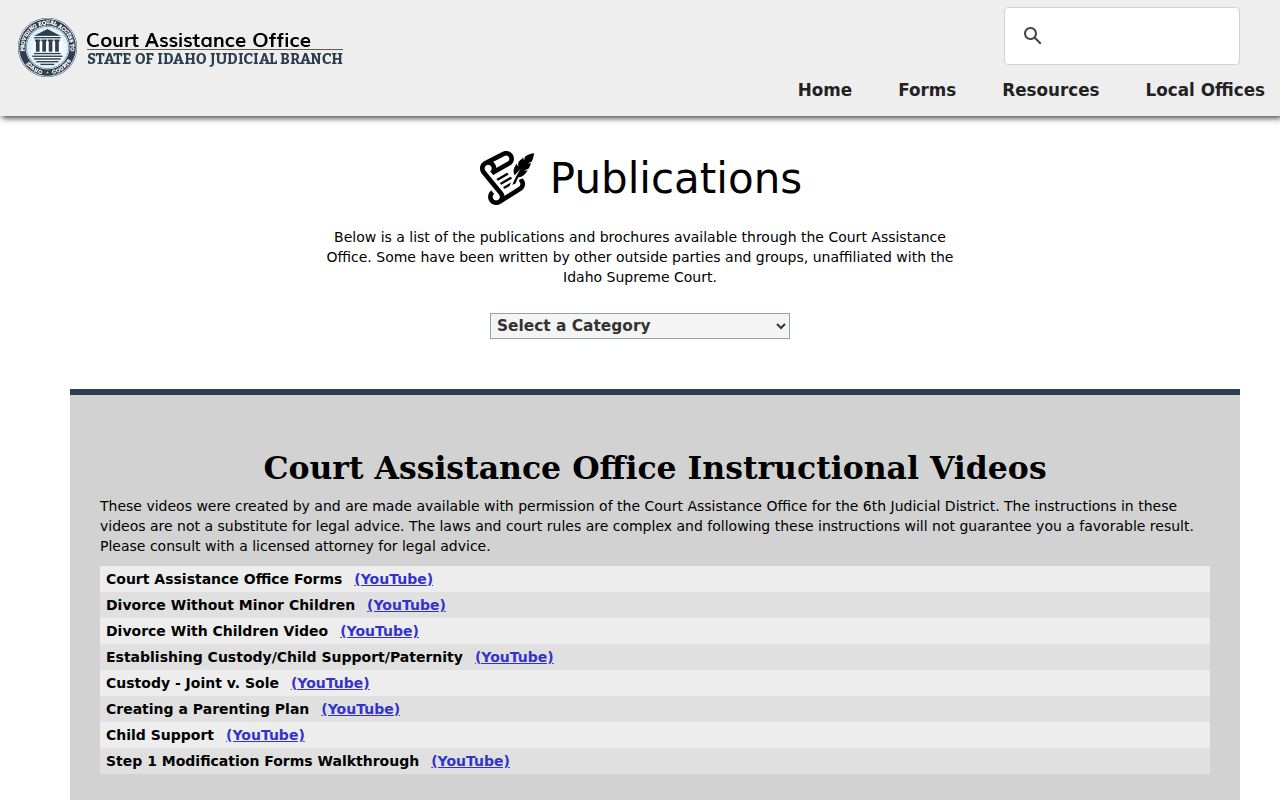
Those publications give statewide background, while the estate record remains with the filing clerk.
Guardianship and conservatorship files add different records, including appointments, bonds, care plans, reports, and visitor or guardian ad litem material. Guardianship concerns personal care and decisions. Conservatorship concerns money and property. One person may fill both roles, but the orders and duties remain distinct.
Restricted Idaho Probate Records
Idaho probate access follows Idaho Court Administrative Rule 32. Public portions may be inspected, while sealed items and protected data remain closed. Guardianship cases can contain medical reports, evaluator material, care plans, account details, and facts about minors or protected adults. A personal representative, ward, protected person, lawyer, guardian ad litem, visitor, or person with a court order may need to prove identity and authority. The clerk can provide an open or redacted portion without revealing protected content.
The District of Idaho CM/ECF source depicts a separate federal system, not an Idaho probate channel.
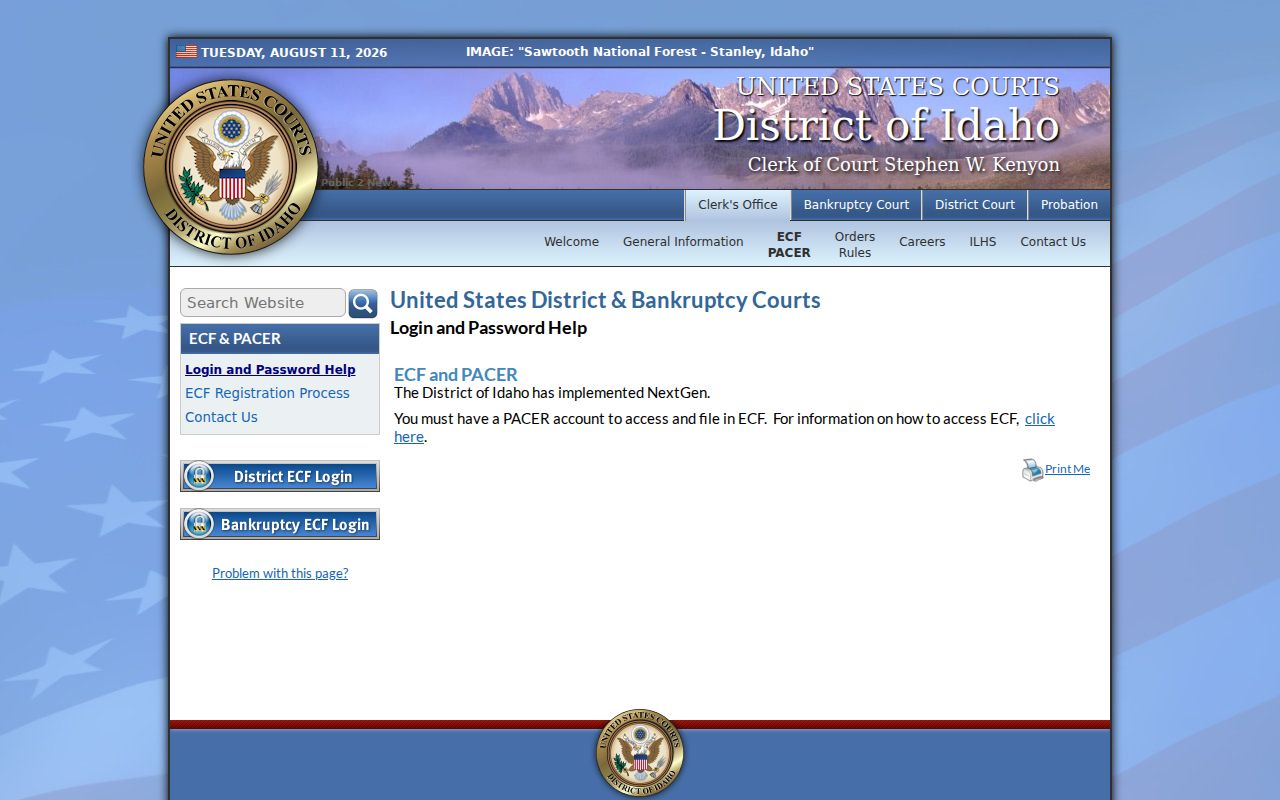
Federal bankruptcy records should not be confused with a county Magistrate Division estate file.
Note: Restricted probate material may require proof of role or a court order even when iCourt confirms that the case exists.
Find Idaho Probate Records by County
The filing county is the key source for Idaho probate documents. Send the clerk the decedent's name, iCourt case number when known, approximate year, and exact document titles. State whether inspection, a plain copy, or a certified copy is needed. Ask about archive retrieval time, payment, and delivery. For material not supplied through the normal copy process, ask whether an ICAR 32 request applies. Use the directory of all 44 Idaho counties to find the clerk who can retrieve and certify the authoritative Magistrate Division file.