
Idaho Criminal Court Records
The county’s unified Clerk of the District Court keeps one prosecution’s case file. It may begin with a complaint, probable-cause material, warrant return, first-appearance minutes, and bond order. Later records can include an information or indictment, arraignment, plea, motions, hearing minutes, verdict, judgment, sentence, and appeal. A booking sheet and police report remain law-enforcement records unless filed in court. For the arrest-to-filing distinction, review Idaho arrest records and court charges.
Idaho’s Magistrate Division handles misdemeanors and the early stages of felonies, including first appearances and preliminary hearings. If a felony is supported by probable cause, it is bound over for District Court proceedings and the prosecutor files an information unless a grand jury indictment is used. District judges conduct felony trials and sentencing. Both divisions are part of the unified District Court, and the elected county clerk serves as clerk for each. The county of filing, not a separate clerk type, determines where documents are requested.
Search Idaho Criminal Court Records
The official iCourt Portal indexes trial cases across all 44 Idaho counties. Search by exact case number when possible, or use a defendant name with location, case type, filing date, and status filters. A result can show public case details, parties, charges, events, hearings, dispositions, and financial entries. Recurring CAPTCHA and session controls may apply. Public event listings do not guarantee document downloads, and sealed matters or exempt entries may be absent.
- Open iCourt Smart Search and enter the exact criminal case number or the defendant’s full name.
- Narrow a name query by county, criminal case type, filing range, and status to avoid same-name errors.
- Compare the caption, county, filed date, and assigned court before selecting a case.
- Read each charge and its disposition separately, then review the judgment and sentence entries.
- Request a certified disposition or order from the filing county through the county directory.
For a compiled Idaho history, use the Idaho State Police Bureau of Criminal Identification rather than treating iCourt as a background-check certificate. BCI relies on arrest information reported by Idaho criminal-justice agencies and associated charge and disposition reporting. It covers Idaho information only. Missing fingerprint submissions can create gaps, and a name-based match can miss aliases or false identifying data. The county clerk remains the source for the complete case file and certified court outcome.
Idaho Criminal Case Stages
An Idaho prosecution begins with an arrest, citation, or summons, but the court file develops when a charging instrument is filed. A magistrate addresses probable cause, counsel, release conditions, and any felony preliminary hearing. Misdemeanors remain with a magistrate. A supported felony moves to a district judge. Pretrial motions can concern suppression, dismissal, evidence, competency, bond, continuance, or disclosure. Disposition may be dismissal, acquittal, guilty plea, or verdict, and a sentence can include custody, probation, financial obligations, treatment, or other terms.
Case flow: Charges Filed › Arraignment › Pretrial / Motions › Plea or Trial › Disposition › Sentencing
Post-judgment activity can extend the register for years. Probation violations, sentence changes, payment satisfaction, appeal notices, appellate decisions, and remittitur all become part of the procedural history. A presentence investigation report is presumptively sealed even when the public judgment describes the sentence.
What Idaho Criminal Records Show
Idaho’s public schema connects the case header to the parties, counts, proceedings, outcomes, and sentence. The exact layout can vary by access role. A case number such as CR01-24-31665 uses a criminal prefix, location code, filing year, and sequence. Keep the hyphens when searching. Public access redacts Social Security numbers, full birth dates, account identifiers, protected victim information, and other restricted data.
| Field | What It Shows |
|---|---|
| Case Header | Number, county, court, case type, filed date, status, and assigned judge. |
| Parties | State of Idaho, defendant, prosecutor, defense counsel, and representation dates where public. |
| Charges | Count, offense, statute, felony or misdemeanor or infraction level, offense date, and amendment history. |
| Proceedings | Complaint, first appearance, bond, preliminary hearing, information or indictment, plea, motions, trial, and appeal. |
| Disposition | Guilty, dismissed, acquitted, or another count-specific result, with date and judge where shown. |
| Sentence and Finance | Custody, probation, suspended terms, credit, fines, fees, restitution, payments, and public balances. |
Idaho Charges and Convictions
A filed charge is an accusation. It is not proof of guilt. Idaho criminal records may preserve counts that were amended, dismissed, or resolved by acquittal as well as those ending in conviction. Pending means unresolved. Dismissed means the count ended without conviction in that case, though the order must be read for context. Idaho’s withheld judgment is a distinct disposition and should not be flattened into either an ordinary conviction or a dismissal.
| Charge | Conviction | |
|---|---|---|
| Stage | Accusation | Verdict or plea |
| Burden of Proof | Probable cause | Beyond reasonable doubt |
| Record Meaning | What the prosecutor alleged | What the judgment establishes after plea or trial |
Read Idaho Criminal Dispositions
Read the result for each count, not just the case-level status. Guilty can follow a plea or verdict. Acquitted or not guilty means the factfinder did not convict. Dismissed with prejudice generally bars refiling of the same matter, while dismissal without prejudice may permit a lawful and timely refiling. A sentence entry may combine incarceration, retained jurisdiction, probation, suspended portions, credit, fines, costs, restitution, treatment, a no-contact order, license consequences, and concurrent or consecutive terms. The signed judgment controls when a portal summary is unclear.
Idaho Sealing and Expungement
Idaho distinguishes redaction, sealing, statutory exemption, shielding, and repository expungement. Sealing restricts access by court order. Criminal-case shielding under Idaho Code §67-3004(11) removes qualifying court records from public view but preserves access for the defendant and official justice users. Expungement may address a particular repository entry under an applicable law. The remedy and eligibility depend on the arrest outcome, count, time, compliance, and record involved. A court portal change does not automatically rewrite sheriff, prosecutor, federal, or previously retained copies.
| Sealed | Expunged | |
|---|---|---|
| Primary Effect | Restricts public court access under a rule, statute, or order | Addresses an eligible repository entry under the controlling law |
| Official Access | May remain available to the defendant and justice agencies | Depends on the specific expungement authority and repository |
| Procedure | File in the court and county controlling the case | Follow the BCI or other record custodian’s specific process |
Idaho Criminal Records Access
Idaho Court Administrative Rule 32 governs judicial-record access. It generally permits inspection of indexes, chronological summaries, calendars, minutes, orders, judgments, open-hearing records, pleadings, motions, and eligible admitted evidence, subject to listed exceptions. The county custodian may ask for a specific written request. Most judicial requests are disclosed, denied, or referred to a custodian judge within three working days, with notice and an outside ten-working-day period when more time is required.
Key Statutes:
ICAR 32 defines public and exempt judicial records, local and online access, redaction, sealing, and custodian review.
Idaho Code § 67-3008 limits criminal-history dissemination, including certain unresolved arrest information without a current signed release.
Idaho Criminal History Checks
The Idaho State Police Bureau of Criminal Identification is the central Idaho criminal-record repository.
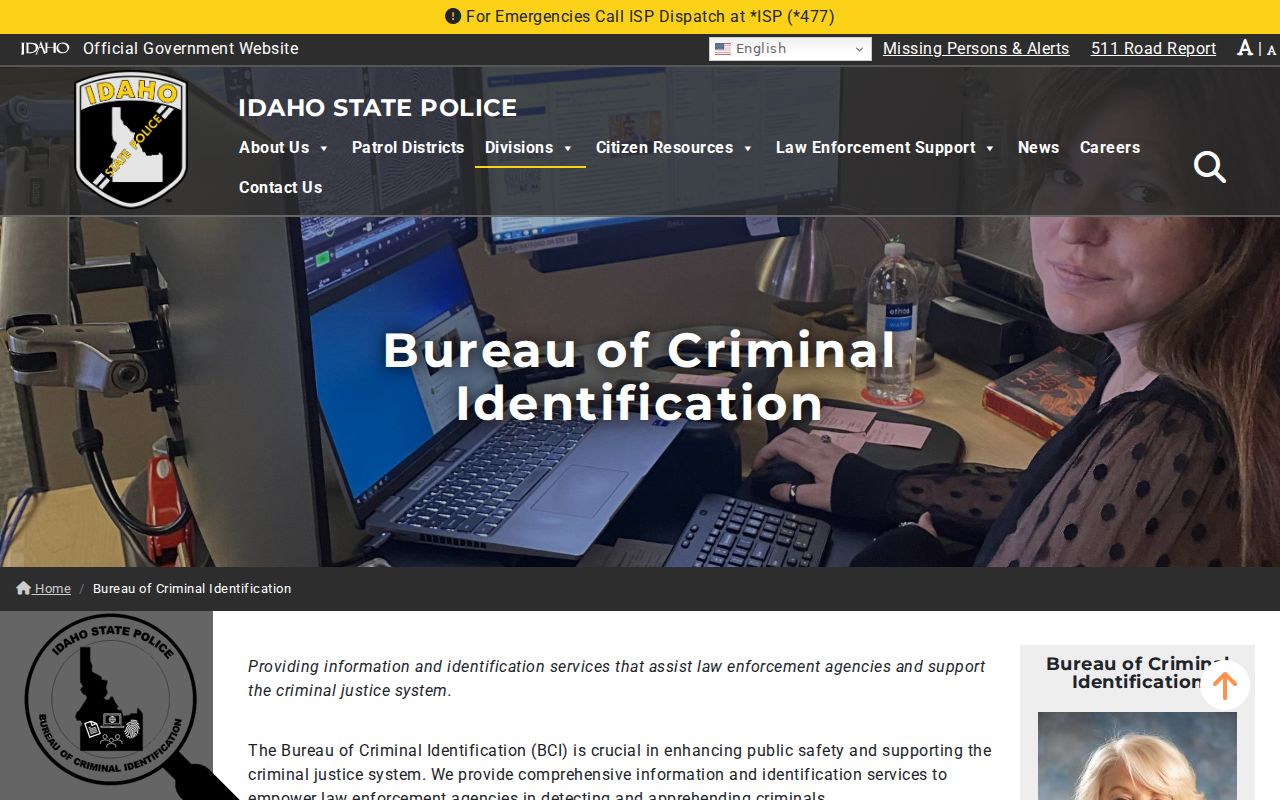
BCI alone can conduct a statewide public or noncriminal-justice Idaho check; a county sheriff can search only its local records. The repository is Idaho-only and fingerprint-dependent, so it is not a national FBI report and may omit an arrest for which no fingerprint card was submitted.
The official BCI criminal-history instructions explain name-based and fingerprint-based checks, challenges, and reporting limits.
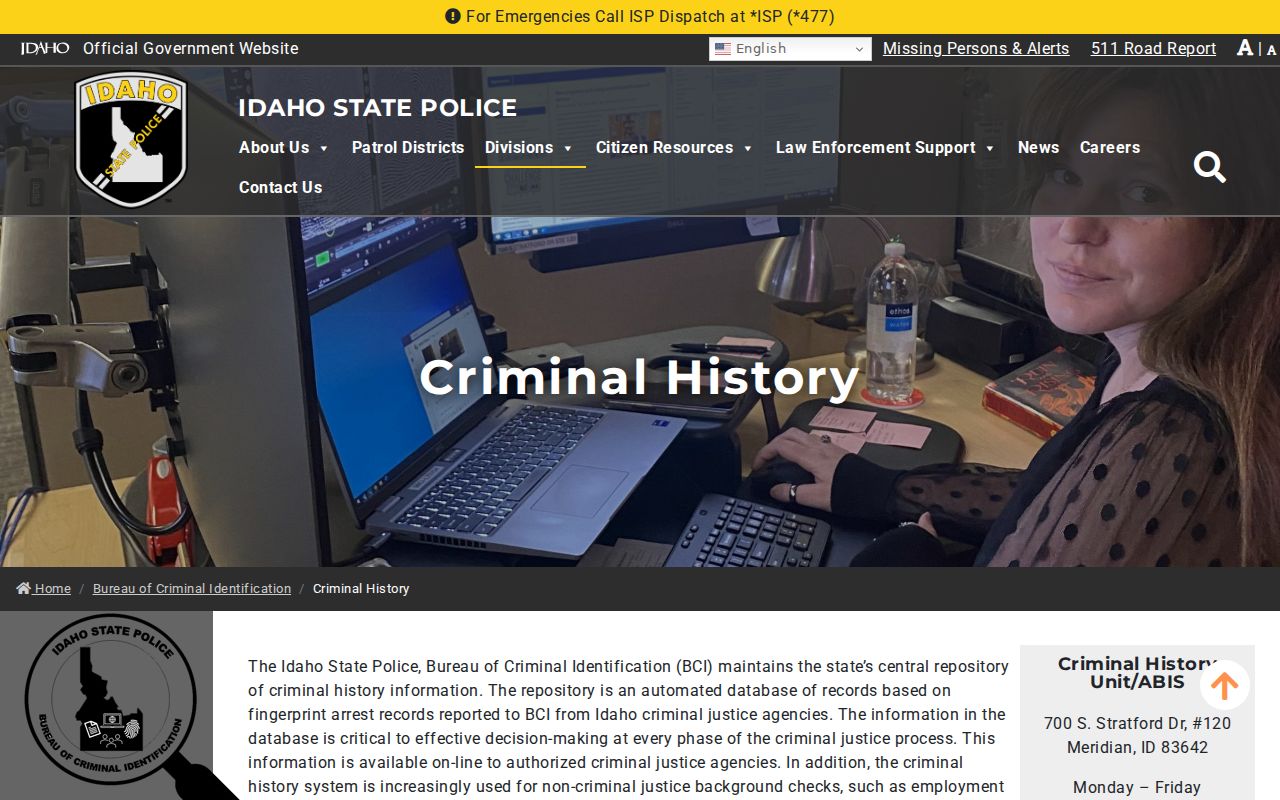
A name-based request costs $20 per subject and uses identifiers such as full name, aliases, birth date, sex, race, and address. A fingerprint-based challenge can reduce false matches and is the route BCI identifies for certified accuracy disputes. Results are not given by telephone or fax.
The official Idaho Central Sex Offender Registry is another distinct State Police system.
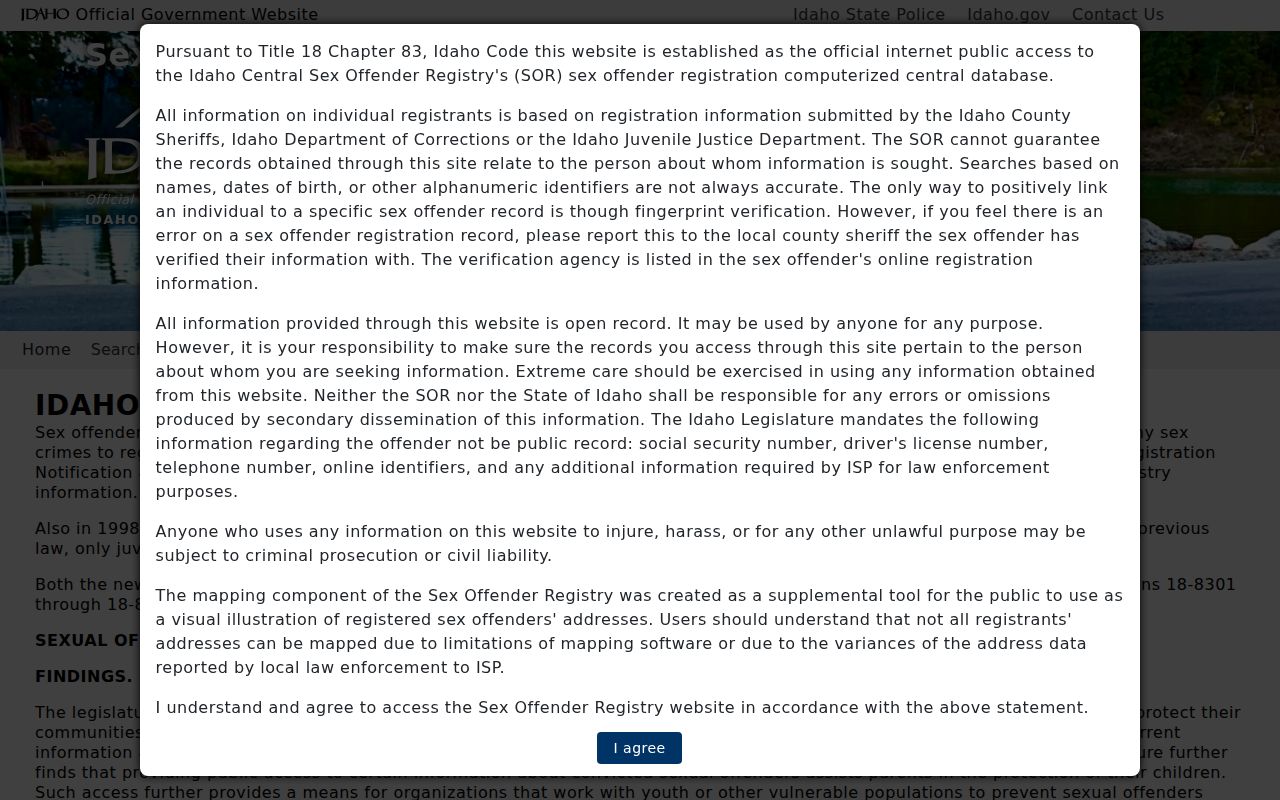
The registry is not a substitute for iCourt or BCI. It serves a narrower statutory purpose and has its own public-search and use restrictions.
Important: Idaho Court Records is not a consumer reporting agency, and its information may not be used for employment, credit, housing, or other FCRA decisions.
Restricted Idaho Criminal Records
Juvenile and child-protection records, unreturned warrants, certain warrant affidavits before return, pretrial risk assessments, presentence reports, confidential-informant material, sealed cases, and protected victim or minor data are not ordinary public records. Social Security numbers, full financial-account numbers, and other personal identifiers are redacted. A sealed case may disappear from iCourt, although an order concerning sealing may remain public unless separately restricted. Parties, counsel, authorized agencies, and people with a court order can have role-based access that the public does not.
For source documents, identify the case in iCourt and contact the filing county through the Idaho county directory. For BCI accuracy work, obtain the certified repository record and certified dispositions from each county. Neither a portal screenshot nor a local sheriff check substitutes for those records.