
Idaho's Unified Clerk Structure
Idaho uses one locally administered clerk structure for trial-court files. The elected county clerk serves ex officio as Clerk of the District Court. That office maintains records for both District Court and the Magistrate Division, including civil, felony, misdemeanor, traffic, family, probate, judgment, and docket material. Juvenile and other protected content remains subject to access controls. The statewide court system is unified, but file custody is local, so a request for a trial document goes to the clerk in the filing county.
The same elected officer commonly also serves as auditor and recorder. Staff counters may divide court work, recording, marriage licensing, elections, and accounting for practical reasons. Those internal units do not create a second clerk office. Land records remain on the recorder side, while marriage licenses are issued and recorded through the county clerk's licensing function. Sheriff booking records and prosecutor investigative files are not court-clerk records.
Idaho Clerk of District Court
The Clerk of the District Court serves each of Idaho's 44 counties. District-level files include felony cases after bind-over or indictment, civil claims over $10,000, administrative review, and appeals from the Magistrate Division. Magistrate-side files include misdemeanors, infractions, traffic matters, civil claims through $10,000, eviction, small claims, divorce, custody, support, probate, guardianship, and conservatorship. The clerk also maintains dockets, judgments, payment ledgers, and exhibits subject to Idaho access rules.
- Felony complaints, informations, pleas, motions, judgments, and sentencing orders
- Civil pleadings, service returns, motions, orders, judgments, and public exhibits
- Misdemeanor, infraction, traffic, eviction, and small-claims dockets
- Divorce, custody, support, probate, guardianship, and conservatorship files
- Marriage-license records and land records through the office's separate county functions
Idaho Clerk Records and Duties
One Idaho clerk office holds all trial-level case categories, although internal staff divisions may route a visitor to a different counter. State appellate records move to the Idaho Supreme Court Clerk once lodged on appeal.
| Record / Case Type | Office Function | Record Notes |
|---|---|---|
| Felony and higher-value civil cases | District Court clerk function | Includes core pleadings, orders, judgments, and public exhibits |
| Misdemeanor, traffic, small claims, family, and probate | Magistrate Division clerk function | Same elected clerk and county office |
| Marriage licenses | County clerk licensing function | Application and returned recorded certificate |
| Real property and deeds | County recorder function | Not a court case file |
| State appellate record | Idaho Supreme Court Clerk | Use the appellate request route after the record is lodged |
What Idaho Court Clerks Do
Idaho clerks accept filings, assign case numbers, maintain the official case file and register of actions, issue authorized process, collect and receipt court money, preserve public exhibits, and produce plain or certified copies. The clerk is a records custodian, not a judge, lawyer, sheriff, or prosecutor. Staff can identify filing requirements and available forms but cannot tell a person which claim to bring, predict a ruling, or interpret an order as legal advice. Idaho Court Administrative Rule 32 governs judicial-record access, including the process for disclosure, denial, or referral to a custodian judge.
- Accept authorized paper and electronic filings and create the case record
- Maintain pleadings, orders, dockets, judgments, and accessible exhibits
- Issue summonses, subpoenas, writs, and other process when authorized
- Collect filing fees, fines, and other court payments
- Certify copies and arrange inspection or delivery
- Apply sealing, redaction, and role-based access rules
Request Certified Idaho Court Copies
A certified Idaho court copy bears the clerk's certification or seal and is different from a plain printout. Courts, agencies, banks, and title offices may require certification. Start with iCourt for the case number, but order the paper from the filing county. Give the clerk an exact title and date, such as a judgment, sentencing order, divorce decree, or letters of administration. Ask whether the recipient needs certification or the more formal exemplified or authenticated product before paying.
Access can be requested at a courthouse counter, by mail, and sometimes by email or a county form. The Judicial Branch also directs the public to a courthouse computer kiosk for case information and available records. Local courthouse access can differ from anonymous internet access under ICAR 32. A phone call is useful to confirm file location, archive status, payment, and delivery, but a call itself does not produce a certified record. Most judicial-record requests must be disclosed, denied, or referred to a custodian judge within three working days. When more time is needed, notice is given and the outside period is ten working days.
- Find the filing county through the county directory and confirm the file is still held there.
- Collect the case number, full party names, approximate year, and exact document title.
- Ask for inspection, a plain copy, certified copy, exemplified copy, electronic PDF, transcript, or audio as needed.
- Get a page count, certification quote, accepted payment method, and delivery estimate before sending payment.
- Provide ID or authority when seeking a restricted record as a party, lawyer, or authorized person.
Idaho Records Request Fields
No single mandatory statewide county-copy form was located. A clear letter or local form should identify both the case and the requested product so staff do not have to guess.
| Field | Required | Notes |
|---|---|---|
| Requester and contact | Normally | Mailing address, email, and phone; state party or lawyer role if relevant |
| County and court level | Yes | Filing county and District Court or Magistrate Division |
| Case number | Strongly preferred | Copy the full number from iCourt |
| Caption or party names | Strongly preferred | Include former names and approximate year when useful |
| Documents and dates | Yes | Name the complaint, order, judgment, decree, audio, or other item |
| Copy and delivery type | Yes | Inspection, plain, certified, exemplified, PDF, pickup, or mail |
| Access basis and cost limit | When applicable | Attach authority and ask for approval before exceeding a set amount |
Idaho Court Clerk Fees
Idaho Court Administrative Rule 32 permits the clerk to set paper-copy cost up to the maximum in Idaho Code section 31-3201. There is no sound single statewide checkout price for every county and every copy product. Prepayment may be required. General agency public-record fee benefits should not be applied automatically to judicial case copies, because court files follow ICAR 32 and the clerk statute. A filing fee also differs from a form-service fee or a copy charge.
| Item | Amount |
|---|---|
| Paper court copy | Clerk-set, not over section 31-3201 maximum |
| Certified or exemplified copy | Confirm with the filing county |
| Statewide court-form download | $0 |
| Court Assistance loose form page | Up to $0.25 per page |
| Court Assistance form review | Up to $5; cited waiver rule may apply |
| Divorce petition filing example | $207; verify current Appendix A and clerk |
Common Idaho Clerk Forms
The Idaho civil forms collection provides civil, fee-waiver, service, subpoena, and general filing materials. The statewide Court Assistance Office also publishes divorce packets and legal publications. A county may require a local cover sheet, payment method, or office procedure, so check the filing county before submitting. A fee-waiver request asks about income, household, assets, expenses, and inability to pay; the judge, not the clerk, decides it.
- Civil forms for service, subpoenas, fee waivers, and civil filings
- Divorce forms for family filings and disclosure steps
- Legal publications for probate, wills, small claims, and family topics
Idaho Mail and E-Filing
Attorneys and many represented filers use Idaho File & Serve. Guide & File supports selected self-represented matters. Electronic filing is not the same as anonymous public access, and a confidential filing does not become public because it was submitted online. A mail copy request should include the case number, caption, exact documents, copy type, return address, contact details, and a payment plan approved by the county clerk. Call first for archived files or same-name matches.
Federal courts use separate clerks and systems. The U.S. District and Bankruptcy Courts for the District of Idaho are not county Idaho trial courts.
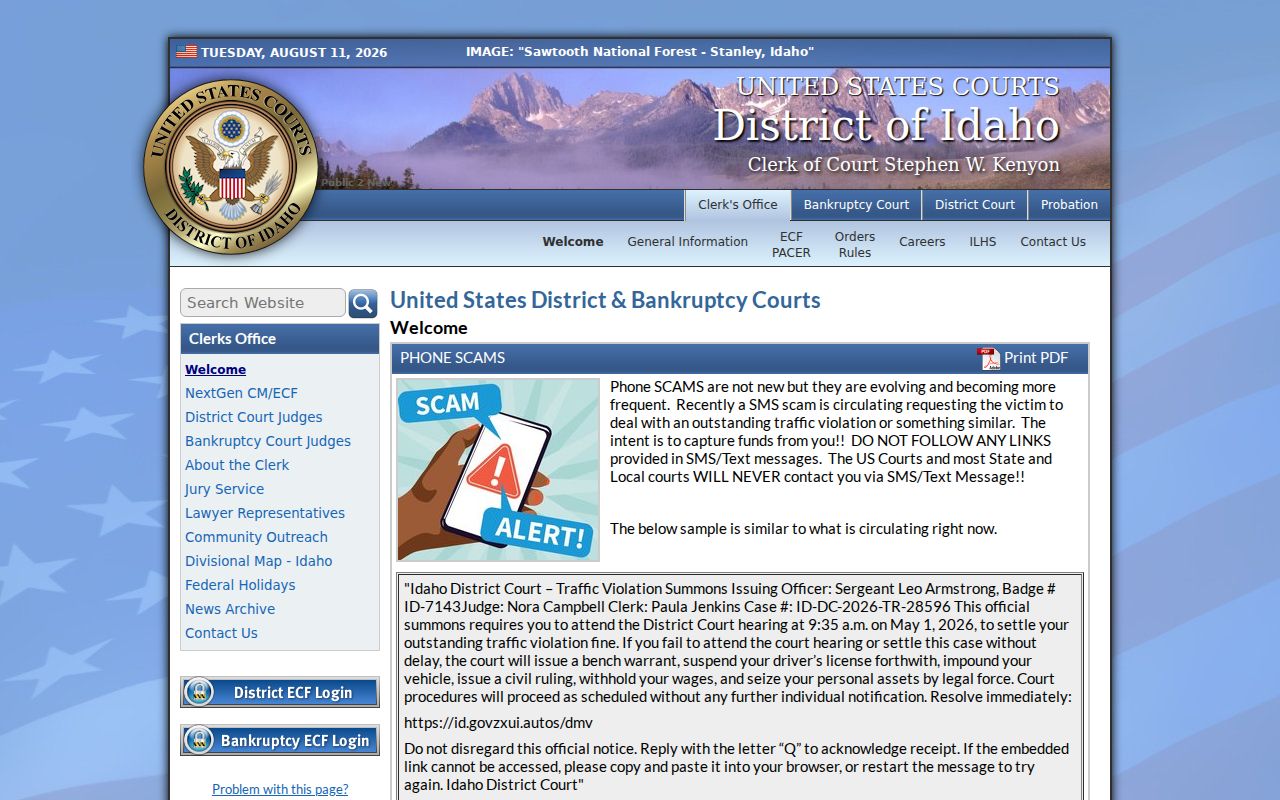
Federal trial records are routed through the federal clerk and PACER rather than the elected Idaho county clerk.
Federal appeals go to the Ninth Circuit Court of Appeals.
The Ninth Circuit route is distinct from an appeal filed in the Idaho Supreme Court.
The Federal Bureau of Prisons locator is likewise a federal custody source, not a clerk case file.
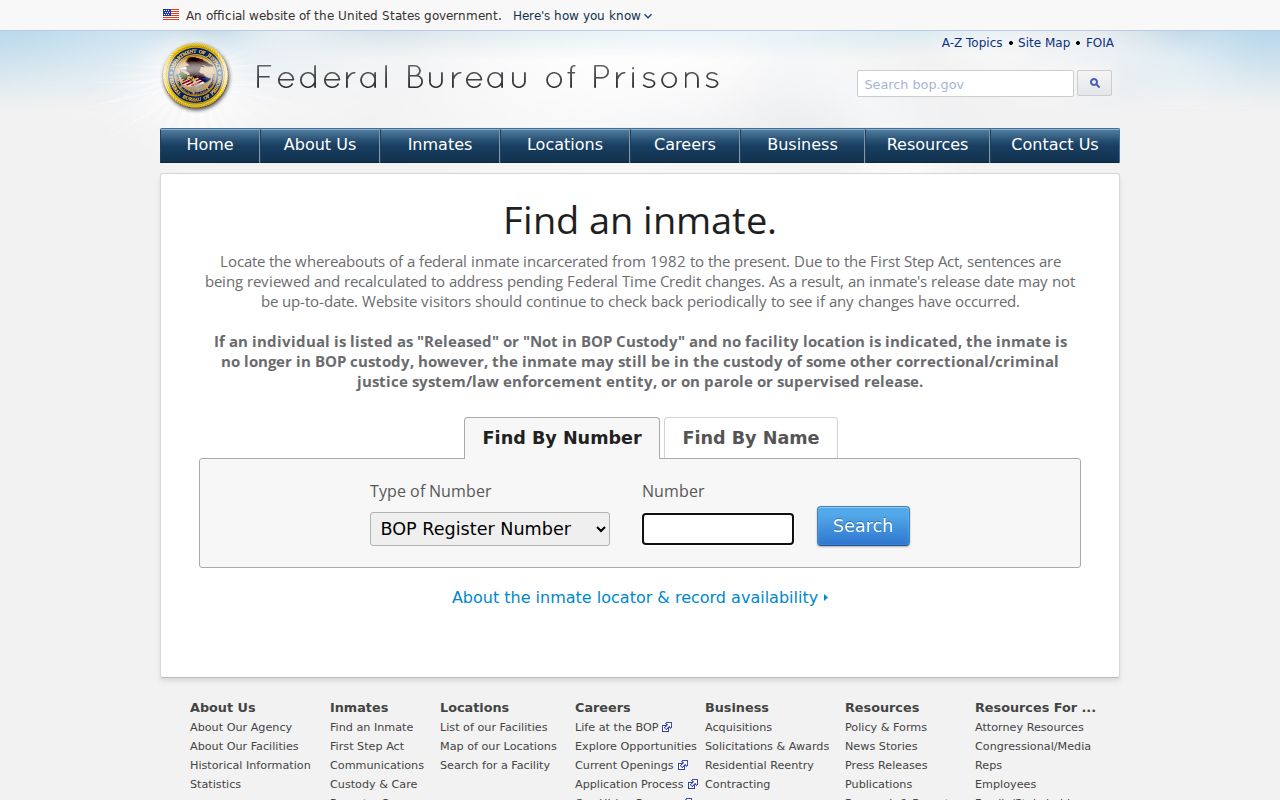
A custody result may identify a person, but the charging papers and judgment must be obtained from the court that filed the case.
Find Any Idaho County Clerk
Each of Idaho's 44 counties elects a county clerk who serves ex officio as Clerk of the District Court. Begin with iCourt when the case number is unknown, then contact the county of filing for the actual document. The full Idaho county directory links every local records site. Ask the clerk to confirm the court level, file location, access status, copy price, certification charge, payment method, and delivery choice. Appellate material already lodged with the state appellate court belongs with the Idaho Supreme Court Clerk instead.
Note: Idaho's unified clerk structure means one elected county office holds District Court and Magistrate files, but not sheriff or prosecutor records.